Body Ebro, day 68
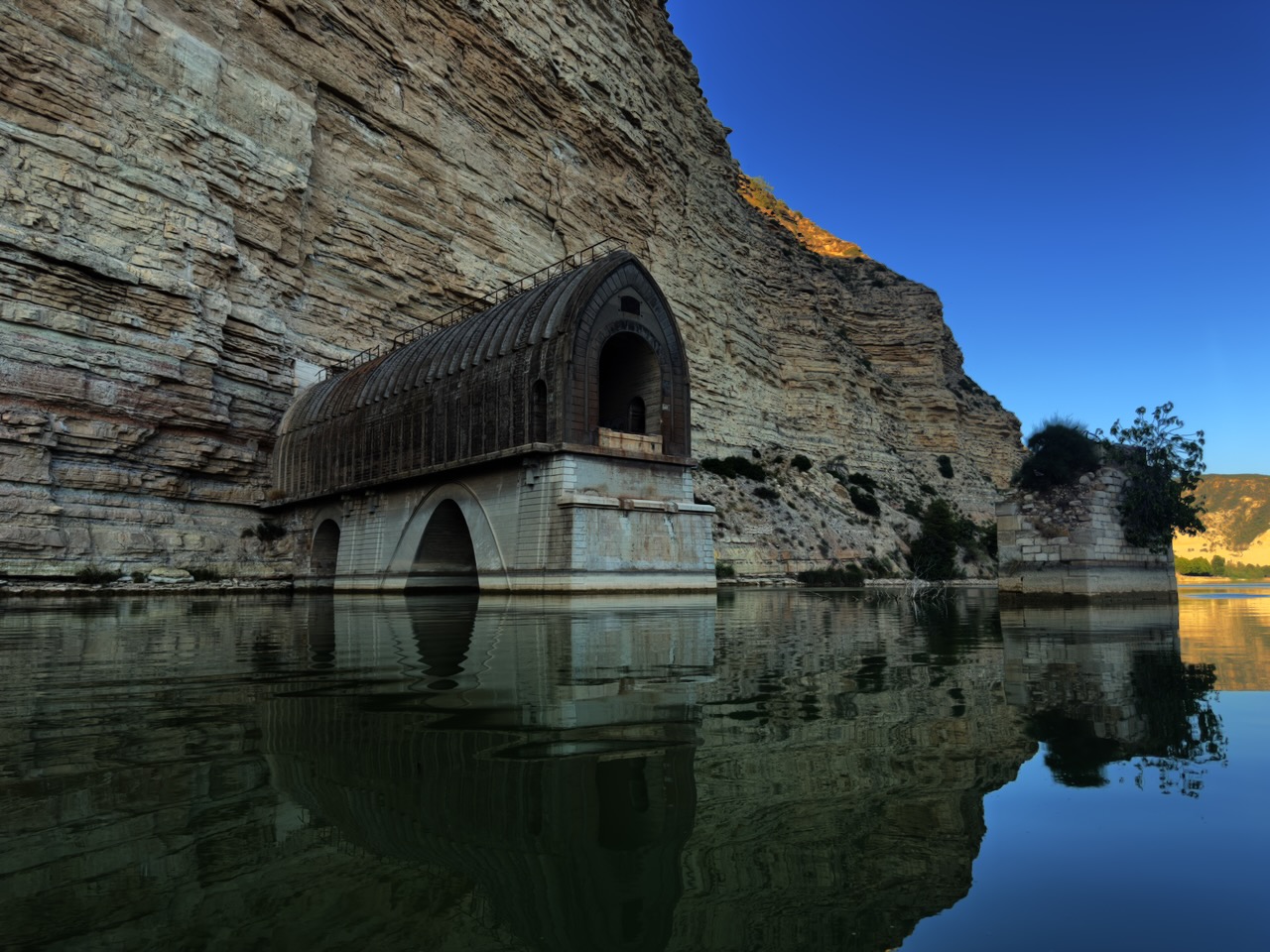
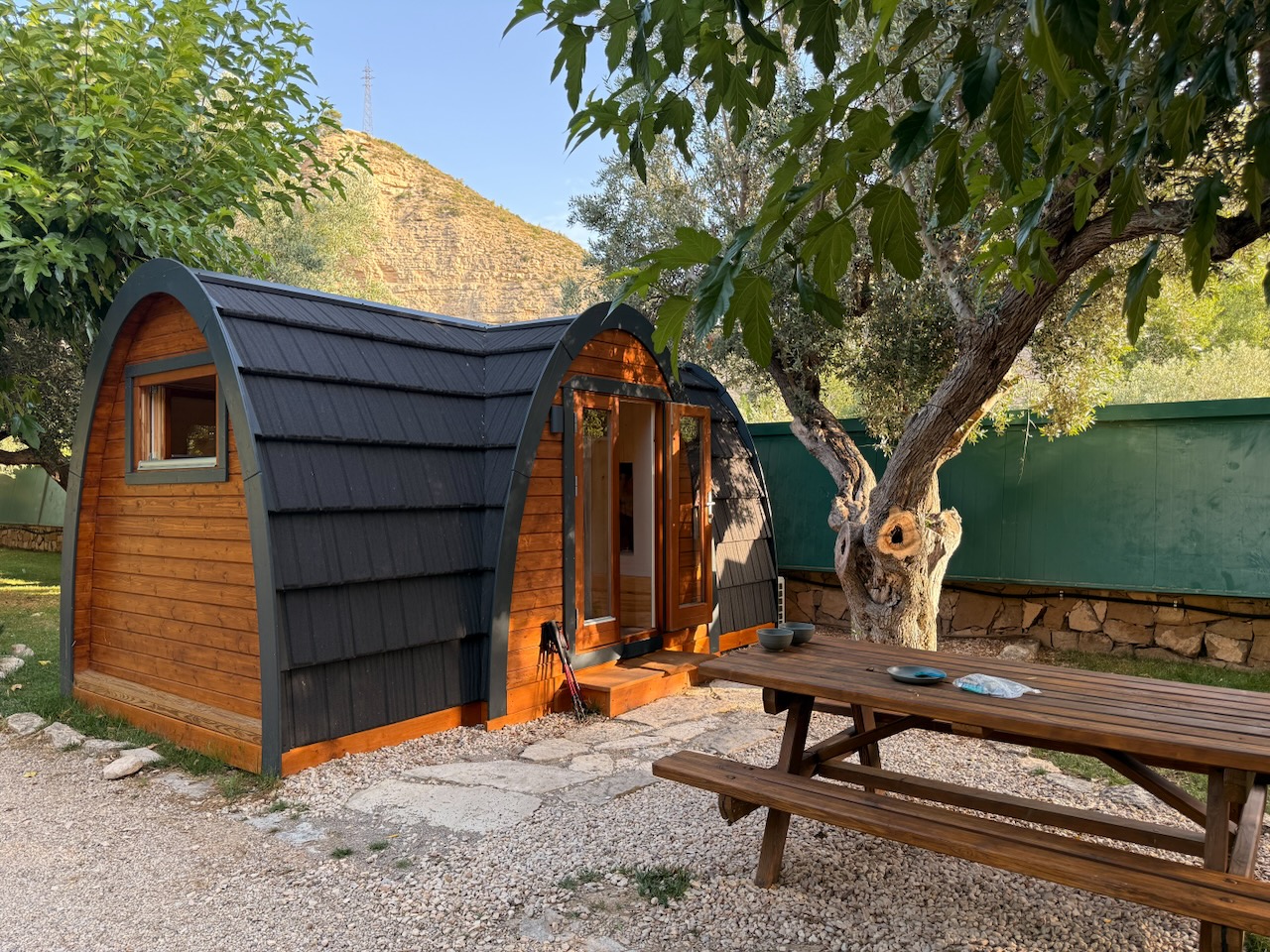
After 68 days on the road, Cos d’Ebre, Body Ebro — after Cantabria, Castile and León, Euskadi, La Rioja, Navarre and Aragon — has reached Catalonia. We’re a step away from the mouth of the Matarraña, on the banks of the Riba-roja reservoir, at Port Massaluca, a small and welcoming campsite that takes us in with affection and attentive care before we set out on the last stretch of the journey. Always hospitable and generous, Port Massaluca had already won our hearts three years ago, during the development of the Sequere project, and this time it wanted to support the production of Cos d’Ebre. Thanks to the whole team!
A month has passed since my last post, a month that, at walking pace, we perceive as years. If during the first part of the journey we crossed the wild quiet of the mountains until we reached the Ebro valley, this last stretch has turned into a long crossing through a rural territory regulated, compartmentalised and channelled for agricultural and industrial purposes. The monotony, the suffocating heat and the frequent rural ugliness made the walking heavier, until we reached the gypsum hills and river terraces near Velilla de Ebro, in the Ribera Baja de Aragón, which were a true rebirth of energy and spirit.
The austere harshness of the urban centres of the Ribera de Navarra, built around the work of the land and sustained in large part by immigration, gradually gave way to friendlier — though more ruined — villages in the Ribera Baja de Aragón, where depopulation is more evident the smaller they are, as in the emblematic case of Velilla.
And then came the Mar de Aragón, the sierra of Caspe and that of Mequinenza, the Riba-roja reservoir and the dramatic stories that lie submerged beneath its waters.
Without dwelling too long, I want to highlight a few especially significant places and moments: the transition between realities experienced at Santa Cruz (between Sartaguda and San Adrián), the magical poplar grove of Boquiñeni, Barataria Island at Alcalá, the Roman ruins of Lepida Celsa, the winding meanders of Sástago, the intense storm at Escatrón and the liquid earth of the Ebro, the reservoir and the sierra of Mequinenza, the galachos, the Amazon data centre and the unsettling desert of solar panels at Chiprana.
On 6 June in Zaragoza, Celeste Reyna organised, together with Ignacio Andrés, Radio Nikosia and Iberflumen, a community synchronisation in dialogue with the waters, celebrating the power of collective movements from an original falúa. Our thanks to everyone who took part!
During our stay in Mequinenza, we had the honour of receiving a guided tour of the museums and the castle, offered especially for us by its director, Javier Rodes. We’re very grateful to Javier for his kindness and availability and for showing us the resistance and resilience of his people.
To reach Mequinenza from Caspe, three days of walking were needed. I was accompanied by my friend, the biologist Jordi Martínez-Vilalta, a great walker, with whom I crossed the sierra of Mequinenza over two days of relentless heat.
Finally, I especially want to highlight the kindness and availability of the people who inhabit these lands, who have offered us support and welcome all along the river. The list of acknowledgements is already beginning to take the shape of a poem.
Arrival schedule
- Saturday 5 July (afternoon): arrival in Tortosa from Benifallet.
- Sunday 6: walk from Tortosa to Amposta.
- Monday 7: departure from Amposta towards Sant Jaume d’Enveja.
- Tuesday 8 (day 82 of walking): end of the journey with a dip in the Mediterranean.